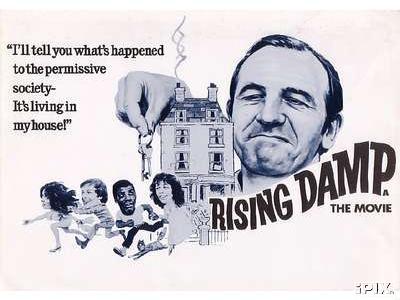
Before the arrival of the video recorder in the early 1980s, the cinema was a huge audience-puller. It seemed almost natural then, that successful TV programmes should transfer to the big screen. Situation comedies were a perfect genre for this transformation. So many 1970s sitcoms had film versions: George and Mildred, Porridge, The Likely Lads, The Lovers, Bless This House, Father Dear Father and For The Love Of Ada to name but a few. Most of them were hit-and-miss, more often miss than hit. So when Roy Skeggs suggested Rising Damp: The Movie, Leonard Rossiter was less than excited. Having produced three moderately successful TV-to-film transfers (Love Thy Neighbour, On The Buses and Man About The House), Roy thought the sitcom, with an original screenplay, would be a success, and had bought the rights to the series as a film. But Leonard and Eric Chappell were not pleased with the prospect of recording unfamiliar material. Eventually, it was agreed that scenes from the TV series could be used, and in fact almost three-quarters of the final film had been previously seen, in a different form, on television.
Joe McGrath was called in to direct the film (having previously worked with Leonard on the sitcom The Losers). With Richard Beckinsale's death earlier in the year, a new actor was required to perform Alan's scenes. Eric Chappell decided to ask a star of one of his other sitcoms Only When I Laugh, Christopher Strauli. He was daunted by the idea of stepping into Richard's shoes, but agreed. He played art student John in the film, one of several noticeable differences between TV series and movie. Philip became a medical student instead of studying town and country planning, John's art studies allowed a girlfriend into the story for him to paint in the nude. Veteran actor Denholm Elliott was hired to play Seymour (played on the small screen by Henry McGee). This particular part of the storyline (Seymour as a conman) was extended so that he has a fling with Miss Jones. Other memorable TV scenes which made the film were the boxing match from A Body Like Mine, the green tablets from Charisma, John's girlfriend's father on the warpath from Permissive Society and Rigsby taking Ruth for a spin in his sports car from Clunk Click. Additional scenes include two fantasy sequences where Rigsby imagines himself first as John Travolta from Grease, and then as Rudolph Valentino, plus a rugby match in which know-it-all Rigsby gets his nose twisted by a rugby player (Pat Roach. A former professional wrestler, Pat says in his biography that Leonard was a huge wrestling fan, with Wayne Jones as his favourite. They would often chat off-set about the sport). Perhaps the most revealing extra detail, however, came at the end of the film when Philip admits he is not the son of an African chief and is in fact from Croydon. This revelation was part of the original play The Banana Box but was dropped from the TV series.
With a modest production budget of £120,000 the movie, filmed at 82, Chesterton Road, a vacant house in London's Notting Hill, crammed a surprisingly large amount of scenes, dialogue and settings into its 86 minutes running time. The strength of the story and its actors, Leonard, Frances and Denholm most notably, made it one of the more successful of the TV-to-film spin-offs. In the year in which The Empire Strikes Back was no.1 box office, Rising Damp: The Movie won many awards, most of them to the complete surprise of its creator Eric Chappell. The film won Best Comedy Film, and Leonard, Frances and Denholm all won awards for their performances. Even Joe McGrath won the award for Best Director.