A Biography and Filmography
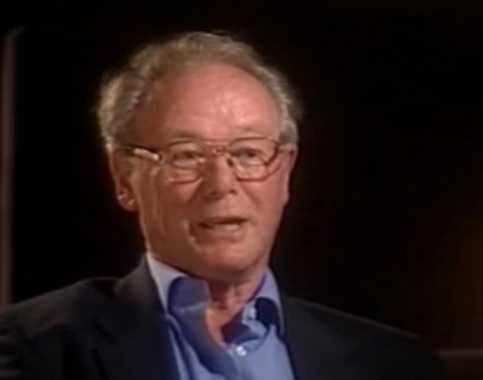
Eric is interviewed
in many
of the Rising Damp tribute clips on the Videos
page.
|
|
~ |
|
~ |
|
Rigsby Online: The Authorised Rising Damp web site
|
A Biography and Filmography
|
Eric talks extensively about the creation of Rising Damp and its cast... |
|
|
Biography
Introduction
"We
didn't
know that Rising Damp would become a little part of TV history", writes
Eric Chappell at the end of his Introduction to the complete Rising
Damp
scripts. But history it is. One of the most fondly-remembered,
thankfully
never-imitated, most often-repeated situation comedies on British
television.
What made it so successful? The actors, certainly. But the actors are
only
the puppets in a fictional performance. It is the writing - the
character
profiles, the storylines, the setting, the dialogue, the comedy, the
timelessness,
the believability - all of these things can come from only one source:
the writer. As writers go, it can definitely be said that Eric Chappell
'got lucky' with Rising Damp. He wrote a play - only the second he'd
ever
written, it got accepted, it received rave reviews, it reached the West
End, a TV company saw potential for a sitcom and, as that well-worn
phrase
goes "...the rest is history".
Sowing the seeds
Eric
Chappell was born into a working-class family in the town of Grantham
in
Lincolnshire, in 1933. (The town's most famous child, however, is
Baroness
Thatcher). Even before he became a teenager, Eric seemed to have a
talent
for stories. A teacher nurtured his creativity and, when asked to
relate
a fictional story to the rest of the class, Eric spoke for over an
hour!
Getting his ideas from books he'd read at the local library, he
established
himself as one of the high spots of his classmates' lessons, and ended
up storytelling every week. After moving on to his Secondary School,
however,
the emphasis was more on sport and less on English, and so his interest
started to wane.
Eric
went on to study accountancy at college, although he admits he didn't
have
much aptitude for figures. He failed his finals but nevertheless landed
a job as an auditor with the East Midlands Electricity Board, checking
cash and compiling reports at branches from Coventry to Leicester. But
away from his day job, Eric had secretly returned to his love of
storytelling.
He penned rough drafts of several novels on his typewriter, but admits
they were never good enough for publication: "They were bad novels, and
looking back, I'm ashamed of them", he says. As all writers know, the
returned
manuscript with the accompanying rejection slip is extremely
demoralising,
and destroys motivation in a flash. At a low ebb after another such
continued
rejection, Eric decided to try another genre - a play. He remembers the
idea came to him in the bath: "Why don't I write a play?!", he
exclaimed,
in an Archimedes-type Eureka! moment. "For one thing it's only 20,000
words
instead of 70,000".
Motivation
A
biography
of playwright and author Robert C. Sherriff inspired Eric to send his
first
play off to the same agency, Curtis Brown, as Sherriff had sent his
first
play (Sherriff went on to be a top Hollywood screenplay writer, penning
Goodbye Mr. Chips and The Dambusters, among others). Entitled A Long
Felt
Want, the manuscript was read by John Bassett at Curtis Brown, who was
impressed with it. It concerned two pubescent boys, and their emerging
attraction to girls. John invited Eric to his London office and
subsequently
became his agent. The play was never produced, however, and Eric is not
that surprised: "It was very much a beginner's piece of work. I hadn't
written any comedy or dialogue like that before, and it showed." But
Eric's
realisation that someone 'in the business' had thought he was a good
writer
restored his motivation and enthusiasm, and Eric started to write
another
play. As he did so, he was still working at the EMEB, and should in
fact
have been studying for an accountancy exam. His writing now included
half-hour
radio plays, not all of which were produced. However, his increasing
literary
workload was still clandestine, known only to himself. But events soon
forced a change.
From Bananas to
Big
Time
Eric
Chappell's second attempt at being a successful playwright came in a
full-length
play entitled The Banana Box. This time his manuscript was accepted,
and
the first ever performance of what became Rising Damp took place on
Sunday
29th November 1970 at the Hampstead Theatre Club (see The
Play page for details). The first public performance was on 25th
May
1971 at The Phoenix Theatre in Leicester (with Wilfrid Brambell as the
landlord Rooksby), by which time Eric had had to come clean about his
lack
of exam revision, and the reason why. While walking down a Leicester
street
with his boss, a bus went by with an advertisement on the side stating
'The Banana Box - A new play by Eric Chappell'. Eric decided he
couldn't
keep it a secret any longer, and showed his boss a flyer for the show.
Slowly, his family and friends got to know about his 'secret life'. By
the Spring of 1973, The Banana Box had received such good reviews,
among
them: "It is certainly a fresh piece of writing and has a sense of
style
and wit not found in every potential playwright", that the play had
travelled
to East Grinstead, Oxford and even Newcastle. Eric, now married, took a
gamble and left the Electricity Board. Despite his colleagues thinking
he was mad, he decided to rely on his writing for income (plus his
wife's
job at Oxfam). He remembers: "I'd been planning this for years, but
wasn't
going to take such a big step until I knew I had enough skill as a
writer".
He gave himself two years to make a success. Then, in the summer of
1973,
The Banana Box was performed at the pinnacle of any playwright's
aspirations
- London's West End. Of course, by this time, its previous performances
gave Eric the chance to hone the play and improve certain scenes. Its
gathering
momentum in critics' circles also enabled more established actors to
come
on board. By the time it opened at the Apollo Theatre, Leonard
Rossiter,
Frances de la Tour and Paul Jones were in the cast.
Laughter BAFTA
The
huge
success of The Banana Box in the West End brought it to the attention
of
Yorkshire Television, who commissioned the play as a thirty minute
sitcom
pilot, one of six to be shown in the Autumn of 1974. Entitled Rising
Damp,
the pilot was one of two which made it into a full series. This was not
Eric's first credit for television, however. He had written numerous
scripts
which had been turned down, until HTV accepted one called The Spanish
Dancers.
Starring Henry McGee, it was a comedy drama broadcast in Wales in 1971,
but not networked nationwide. A pilot comedy about office politics
called
The Squirrels was broadcast on ITV eight weeks before Rising Damp. Both
series were commissioned as full series, and Eric found himself under
great
strain writing scripts for both series, and having to meet deadlines
for
the first time: "You sign the contract, you get a portion of your
money,
you agree to deliver by a certain date and suddenly you're on a
treadmill.
At that point in my career I had two contracts, two delivery dates - an
even bigger treadmill". But the hard work had its rewards. The
Squirrels
won Eric the Pye TV Award in 1975 for Most Promising New Writer, and
after
the phenomenal success of Rising Damp, Eric was awarded a BAFTA for
Best
Situation Comedy for Rising Damp in 1978.
| Success
Now with a growing family, and with Jean Warr as his assistant, Eric Chappell was a successful writer, both on TV and in the theatre. A 1976 play We're Strangers Here became the sitcom smash Duty Free, and Eric's other contributions to great British comedy include Only When I Laugh, Home To Roost, The Bounder, Singles and Fiddler's Three. "I always write the play first, or try to", says Eric. "It imposes all sorts of disciplines on you which are good when it comes to writing the sitcom". Besides writing the screenplay for a movie version of Rising Damp (which won a whole host of awards, including the Evening Standard Award for Best Comedy Film), Eric continued writing for the theatre and television throughout the 1990s and continues to this day. One of his plays is always being performed somewhere in the UK, and have been produced as far afield as Kenya, South Africa and Australia. American and European versions of his sitcoms have also been produced. Eric Chappell died on April 21st 2022, aged 88. You can read obituaries and news reports of his death here, here, here, here and here.
Visit Eric Chappell's web site. |
|
Eric Chappell Credits
Theatre:
(playbooks available here).
Synopses courtesy of Arts-archive.
The Banana Box,
1971
The play from which Rising
Damp evolved. The story of a miserly, mean landlord, Rooksby, and his
long-suffering
tenants: Noel Parker, black girl Lucy, object of Rooksby's affection
Ruth
Jones, and black man Philip, who is the son of an African chief - or is
he? A story of bigotry, prejudice, changing attitudes and sexual
frustration
in a dingy working-class boarding house.
We're Strangers Here,
1976
Two British couples make
acquaintance on holiday in Spain. The husband of one couple is soon
chasing
after the wife of the other couple. A comedy, which was subsequently
turned
into the sitcom Duty Free (see below).
Natural Causes,
1984
Acclaimed by national
press
at its premiere as a 'highly original comedy thriller, full of mistaken
identities, hilarious consequences and some great laughs'. So, who will
actually drink the poison? Will it be the wife or the mistress, or even
the errant husband? Innocent bystanders are not entirely safe, and even
the poor rubber plant gets involved! Natural Causes will keep you in
suspense
until the hilarious conclusion.
Up And Running/Up
And
Coming, 1988
A political comedy.
Philip Conway is attending a party conference where he intends to make
his thrust for power. On the night in question his position is
compromised
by various visitors including Vicky, whose love promises to be a
permanent
embarrassment.
Fiddler's Three,
1990
A double bill of plays
dealing
with office life and the struggles of three accounts clerks Rex, Harry
and Osborne to address the twin problems of dismissal and promotion
watched
over by the steely J.F.
Something's Burning,
1992
A wry comedy centred on
Nell, an attractive if acerbic woman who has been deserted by her
husband
and now feels at the crossroads of her life. Her affair with
George
Rush, a local teacher and poet, is going nowhere until the arrival of
an
older man. He provides the spark which causes the dying affair to
erupt suddenly into flame.
Haunted, 1994
Nigel Burke, aspiring
playwright,
is neurotic and agoraphobic and hasn't written a word for three months,
to the chagrin of his wife, agent and friends. He is visited by the
mysterious
Potter, who knows of Nigel's interest in Byron and gives him a goblet
used
by the poet. Drinking from the goblet brings about subtle changes in
Nigel's
confidence and manner - and then, out of nowhere, Byron himself appears!
Theft, 1995
A comic thriller. John
Mills
is successful, determined and wealthy. When he returns from an evening
out with wife Barbara and best friends Trevor and Jenny, he finds his
house
has been burgled. He is furious, particularly as the burglar may still
be in the house. When the local copper appears from nowhere, John
assumes
they have found their bumbling burglar, Spriggs. But as Spriggs starts
to expertly manipulate, cajole and corrupt them, we begin to wonder
just
how clever he is. With a hidden safe, childhood rivalries, guilty
secrets
and everything to lose, five very different people play an escalating
and
hilarious game of cat and mouse.
It Can Damage Your
Health,
1995
Based on the TV series
"Only
When I Laugh" (see below) this comedy looks at three mis-matched men
sharing
a small surgical ward.
Heatstroke, 1995
Sam and Fay Spencer arrive
for a peaceful holiday in a luxurious Spanish villa, closely followed
by
actor Howard Booth and his girlfriend, Dodie. Unfortunately, Sam and
Howard
have matching holdalls which become mixed up. Yet a third identical
holdall
containing a large sum of money, brings the sinister Raynor to the
villa
- assumed identities, breakneck pace and hilarious mishaps of farce
combine
with the tension and startling plot reversals of a thriller in this
comedy.
Haywire, 1997
Alec Firth is having an
affair with his assistant, Liz, and has organized his domestic life so
that they can go to Spain on holiday without making Alec's wife Maggie
remotely suspicious. What could possibly go wrong'? The answer: plenty.
On the doorstep, in dizzyingly rapid succession, are: Phoebe, Alec's
mother,
who has discharged herself from her old people's home; Alec's son
Jamie,
with a broken ankle; and his daughter Mandy, heavily pregnant and not
planning
to marry the child's father...
Double Vision,
2000
Myopic ex-boxer Spinks,
impecunious resident of a tower block, let it be known that he has won
the Lottery. In cahoots with his reluctant alcoholic friend Kingsley,
he
attempts to woo twin sisters who come after him for his alleged
fortune.
A tale in the classical tradition of duped tricksters and mistaken
identity.
Ground Rules,
When Gerry and Judith, a
long married couple, rescue Mo from an assault by her aggressive
partner
Ashley one evening at a pub it triggers off a chain of events that even
Judith - trained in counselling - could not have predicted.
Snakes and Ladders,
2001
A reworking of Heatstroke
(see above).
Summer End, 2002
Murder-mystery. Premiered
on 13th August at The
Lane Theatre, Newquay, Cornwall.
Emily Baines is a defiant,
embattled old lady who resides in the Summer End retirement home. She
believes
that her previous companion has been murdered but no-one will listen to
her, especially her new fellow tenant May Brewer. Emily points
the
finger of suspicion at everyone until it finally turns on herself.
We're Strangers Here
and Haunted are to be revised for a new production in the
summer of 2003.
|
|
Television:
The Spanish Dancers
Broadcast on HTV, 1971.
1 x 30-minute
comedy-drama,
starring Henry McGee.
Rising Damp
Broadcast on ITV, 1974 to
1978.
28 x 30-minute sitcom,
starring
Leonard Rossiter, Frances de la Tour, Richard Beckinsale, Don
Warrington.
Directed and Produced by
Ronnie Baxter, Vernon Lawrence, Len Lurcuck, Ian MacNaughton.
The goings-on at a seedy
bedsit, with a mean landlord and his long-suffering tenants.
See the present
web site for details.
The Squirrels
Broadcast on ITV, 1974 to
1977.
28 x 30-minute sitcom,
starring
Bernard Hepton, Ken Jones, Patsy Rowlands, Alan David.
Directed and Produced by
Shaun O'Riordan.
The politics,
misunderstandings
and romances of the office workers at TV hire company International
Rentals.
Only When I Laugh
Broadcast on ITV, 1979 to
1982.
29 x 30-minute sitcom,
starring
James Bolam, Peter Bowles, Christopher Strauli, Richard Wilson, Derrick
Branche.
Directed and Produced by
Vernon Lawrence.
The pranks and scrapes of
three long-term patients of an NHS hospital, and the futile efforts of
doctors and nurses to control them. No.1 in the TV ratings for May
1980
(17 million viewers, above even Coronation Street), and consistently in
the Top 10 for its entire run.
Misfits
Broadcast on ITV, June to
July 1981.
7 x 30-minute sitcom,
starring
Anne Stallybrass, Enn Reitel, Kevin Lloyd, Marcia Ashton.
Directed and Produced by
Ronnie Baxter.
A middle-class landlady
takes a couple of strange misfits under her wing as lodgers. In the Top
10 TV ratings for June 1981 (12.2 million viewers).
The Bounder
Broadcast on ITV, 1982 to
1983.
14 x 30-minute sitcom,
starring
Peter Bowles, George Cole, Rosalind Ayres, Isla Blair.
Directed and Produced by
Vernon Lawrence.
A smooth criminal conman,
fresh out of jail, has learned nothing from his time 'inside'. He moves
in with brother-in-law Trevor and his wife soon falls for his suave
ways.
No.5 in TV ratings for May 1982 (13.3 million viewers).
We're Strangers Here
Broadcast on ITV, 1984.
1 x 60-minute play.
Based on author's 1976
theatre
production.
Singles Night
Broadcast on ITV, 19th
June
1984.
1 x 60-minute
comedy-drama,
starring Robin Nedwell, Angela Richard, John Kavanagh, Jane Carr,
Patricia
Brake.
Co-written with Jean Warr.
Directed and Produced by Robert Reed.
The developing
relationships
of four unattached, divorced, single-parent or unemployed people. Was
commissioned,
albeit three years later, into sitcom Singles (see below).
Duty Free
Broadcast on ITV, 1984 to
1986.
21 x 30-minute and 1 x
60-minute
sitcom, starring Keith Barron, Gwen Taylor, Joanna Van Gyseghem, Neil
Stacy,
Carlos Douglas.
Co-written with Jean Warr.
Directed and Produced by Vernon Lawrence (except Series 3 &
Special,
which were directed by Les Chatfield).
Two couples befriend each
other on holiday in Marbella. The wife of one couple and the husband of
the other soon try to have a fling, and endeavour to meet incognito,
despite
their partners' efforts to stop it. Consistently in Top 6 TV ratings,
peaking
with 17.3 million viewers in January 1986.
Natural Causes
Broadcast on ITV, 1988.
1 x 120-minute
comedy-thriller
play, starring George Cole, Prunella Scales, Benjamin Whitrow, Leslie
Ash.
Directed and Produced by
Vernon Lawrence.
A man hires an assassin
to relieve him of his wife in order for him to marry his secretary.
Home To Roost
Broadcast on ITV, 1985 to
1990.
28 x 30-minute and 1 x
60-minute
sitcom, starring John Thaw, Reece Dinsdale, Elizabeth Bennett, Joan
Blackham.
Directed and Produced by
Vernon Lawrence and David Reynolds.
A father loses his
solitude
when his son turns up, after his ex-wife has turned him out. The
ups-and-downs
of a typical father-son relationship is played out. Final series in
January
1990 peaked with 13.6 million viewers.
Singles
Broadcast on ITV, 1988 to
1991.
22 x 30-minute sitcom,
starring
Roger Rees, Simon Cadell, Judy Loe, Susie Blake.
Co-written with Jean Warr.
Directed and produced by Vernon Lawrence, Nic Phillips, Graham
Wetherell.
The developing
relationships
of four unattached, divorced, single-parent or unemployed people,
evolving
into a double-wedding by Series Three.
Haggard
Broadcast on ITV, 1990 and
1992.
14 x 30-minute sitcom,
starring
Keith Barron, Reece Dinsdale, Sam Kelly, Sara Crowe.
Created by Michael Green,
from his Daily Telegraph column. Directed and Produced by
Vernon
Lawrence and Catherine Morshead.
Set in 1777-78, the
adventures
of three men - a squire, his son and their menial - as they drank,
stole
and gambled their way around Olde Englande.
Fiddler's Three
Broadcast on ITV, 1991.
14 x 30-minute sitcom,
starring
Peter Davison, Paula Wilcox, Charles Kay, Peter Blake, Tyler
Butterworth.
Directed by Graham
Wetherell,
Produced by Vernon Lawrence.
The conspiracies, schemes
and paranoia suffered by three office workers.
Radio:
Like Achilles
Poor Glover
Broadcast on BBC Radio 4,
6th March 1974.
1 x 30-minute play.
A comedy-drama of office
politics. A fore-runner of The Squirrels.
Film:
Rising Damp: The
Movie
Released in 1980
See the present
web site for details.
Contributor:
(Remembering the filming
of or discussing the legacy of Rising Damp, or paying tribute to
Leonard
Rossiter and the rest of the cast).
'Oh, Miss Jones!': The Very Best Of Leonard Rossiter (VHS, 1996)
Laughter In The House: The Story Of British Sitcom (BBC, 1999)
The 100 Greatest TV Moments (Channel 4,1999)
The Unforgettable Leonard Rossiter (ITV, 2000)
Heroes Of Comedy: Leonard Rossiter (Channel 4, 2001)
When Were We Funniest?
(uktv,
2008)
|
|
(c) Paul Fisher
Pictures (c) their
respective
owners